

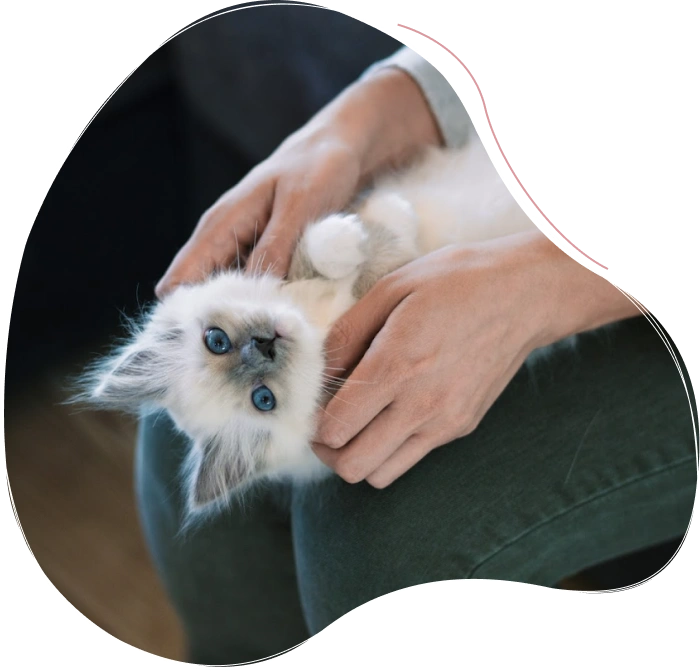

Giving Puppies & Kittens the Best Start in Life
Their first few months are an extremely important time for your pet’s health, as they are growing and developing faster than they’ll be at any other time in their life. They need proper love, attention, and medical care to ensure their short-term and long-term health. Here are some of the services we offer at AniMed Animal Hospital that are particularly geared towards young pets.

Puppy Care
If you are welcoming a new puppy into your family, congratulations! Our team at AniMed Animal Hospital can help your new puppy to begin a happy and healthy life in their new home.
Here Is a Brief Checklist of To-Dos for Your New Best Friend:
Microchipping
We recommend that every puppy receive a microchip embedded between their shoulder blades. This will help reunite them to you if they were ever to become lost.
Spay/neuter procedure
If you do not plan on breeding your puppy, we recommend neutering them between 8 weeks and 6 months. This will prevent an unplanned litter and curb unfavorable behaviors. In addition, spayed and neutered dogs have a lessened risk for some cancers and infections, and generally have higher life expectancies. If your puppy is a large or giant breed, we would like to take radiographs of their hips to screen their likelihood of developing hip dysplasia.
Vaccinations
Puppies should receive their vaccinations in a series of three sets between the ages of 8 and 16 weeks. Here are several of our core vaccines recommended for all puppies: Rabies, DHPP (Distemper, Hepatitis, Parainfluenza, Parvovirus).
Frequent check-up
Visit us frequently during your new pet’s first year of life to ensure they are growing up well and strong. We will help you every step of the way with a wellness plan
Kitten Care
Our team at AniMed Animal Hospital can help your new kitten grow up happy and healthy.
Here Are a Few Pointers to Consider Before Bringing Your New Kitten Home:
- Do you have another cat? If so, we recommend having the new kitten tested for feline leukemia and feline AIDS before introducing them.
- If you do have another cat, it’s in the best interest of safety for the kitten to be kept in a separate room or area for the first day or so of being in your home. This will increase the likelihood that when they do meet, their encounter will be a friendly one.
- Will the kitten be an indoor cat? Indoor cats have longer life expectancies than their outdoor counterparts. They are safer from both diseases and accidents.
Once the new kitten is home, we want to help get them started on the right foot so they can enjoy a long life with their new family.
Here is a list of recommended veterinary to-dos for your new kitten:
- Microchip your new kitten to keep them safe if they ever get out or become lost.
- Spay/neuter procedure will prevent an unwanted litter later on, and decrease your cat’s desire to escape. Also, spayed or neutered cats tend to have longer life expectancies
- Vaccinations should be given to your kitten in a series of three, between 8 and 14 weeks.

Spay/Neuter Procedure
Our veterinary team recommends spaying or neutering all pets. It not only guarantees your pet won't become pregnant or impregnate another pet, but it can also help prevent some health issues— including certain cancers— and behavioral issues.
The spaying/neutering procedure is perfectly safe and routine, and your pet will be safely given general anesthesia throughout the procedure. The recovery from spay/neuter surgery is short and relatively painless– your pet may experience mild discomfort for a few days and then will be back to their old self without any changes in their personality or physical health.
If you have any questions about spaying/neutering, including the best age to have the procedure completed (generally, the younger the better), feel free to contact us and we’ll be happy to answer any and all of your questions.
Microchip Identification
As pet owners ourselves, we know that the thought of losing a beloved pet is enough to make one anxious. We hope to minimize the risk of pet loss by recommending microchip identification for all our patients. Microchipping is a simple, painless procedure that protects against permanent pet loss. The microchip, about the size of a grain of rice, is encoded with your contact information and implanted underneath the pet’s skin in the same way a vaccine is administered. Should your pet ever be lost, veterinary clinics and animal shelters across the country are equipped with special scanners that can read the information stored in a microchip and make sure your pet is returned safely to you.
While collars and tags are important, they can be damaged, lost, or removed, making a microchip the only form of permanent identification for your pet. We highly recommend microchipping as a safe, simple, and effective way to prevent pet loss.
